Hungary is a land locked country in Central Europe about the size of the Indian state of Rajasthan, with a population of about 10 million. It’s biggest lake – Balaton is often referred as its sea, it has a surface area of 600 km2 and is the largest lake in Central Europe. Hungary has a history of being occupied by foreign powers much like India’s. It formed its latest Republic in 1989 after gaining independence from its Russian occupier. Hungarians are known for their poeticism and literature which is poignant as it often resounds the angst of their freedom struggles. Hungary has had 13 Noble Laureates in a variety of fields from literature to medicine and the sciences.
Did Hungarian (the language) come into my life by accident, or was it my destiny? I am often asked why I am learning Hungarian? by my compatriots, by international students and by Hungarians. Having rarely done things in my life with any calculation, I really did not know the answer myself, I have always been one to go with the flow and I believe in learning just for the sake of knowledge. But how was I navigated towards it is what I share with you.
My first brush with Hungary was, when I, all of 8 years old was asked to do a school project on Europe, my grandmother sat me down with the directory, yes it was pre-Google and Email, and made me write postcards to all the European embassies and High Commissions requesting them for literature on their countries. Only a few responded, one being Hungary, which sent me booklets with pictures, which I used in my project, but I still remember the text was in Hungarian and indecipherable. It fascinated me, imagine a child, hitherto unexposed to foreign languages reacting to a sentence like “A Bükk hegység belső területeit 1977. január 1-én nyilvánították nemzeti parkká. A Bükki Nemzeti Park a hegységnek központi, nagyrészt erdős területét foglalja magába.” and wondering why there were so many splotches (the accents) and only the word Park written correctly. This could well have been the kindling of my interest in foreign languages.
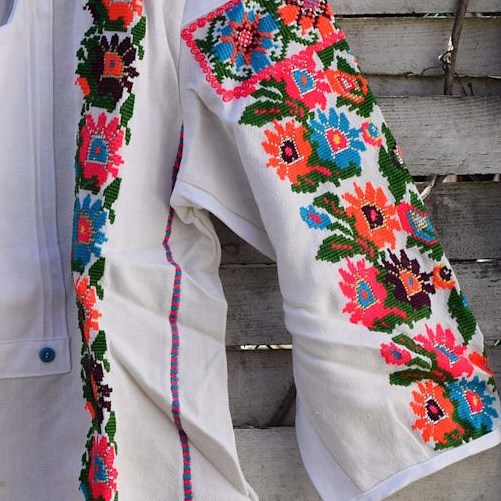
Hungarian, in Hungarian is magyar, pronounced ma-jar. The country is Magyarország. I learnt this only when I started studying Hungarian. However, a distant memory kept niggling me, I remembered my mother once suggesting when I was getting a blouse stitched as a teenager to have Magyar sleeves on it, pronouncing it of course mag-yar. It somehow occurred to me that her mag-yar might very well be my ma-jar, so I looked it up, and lo and behold, I found that the “Magyar” sleeve which is usually cut more narrowly at the elbow and widened towards the wrist is based on the Hungarian peasant style sleeve, hence the name.
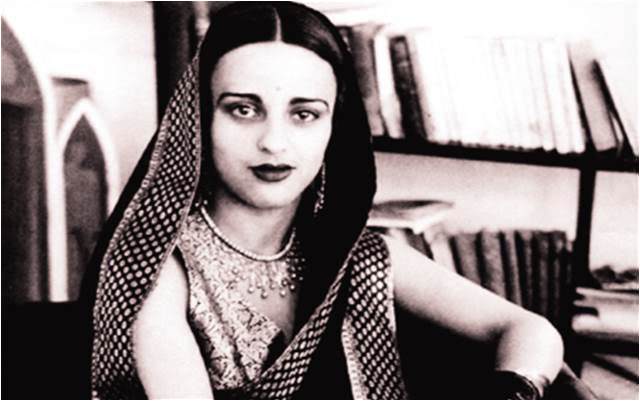
Still a teenager, I recollect, I once said to my my mother that I dreamed of buying my own house in the same locality as hers, when I grew up. My mother said that if I had to dream about such things I should at least dream of a house on Amrita Sher-Gill Street as that was the poshest street one could live on in New Delhi. This brought me to the question – who was Amrita Sher-Gil? She was a Hungarian-Indian painter, born in Budapest, Hungary on 30 January 1913 to to an Indian Jat aristocrat father, a scholar in Sanskrit and Persian, and a Hungarian-Jewish opera singer. Amrita has been called “one of the greatest avant-garde women artists of the early 20th century” and a “pioneer” in modern Indian art. She was avant-garde in more than just her painting and lived life on her own terms to unfortunately die at the young age of 28. In her short life, she lived in various places – Budapest, Hungary, Shimla, India, Paris, France, Florence, Italy and travelled to many countries before breathing her last in Lahore, then India, present day Pakistan in 1941. A truly cosmopolitan soul whose life and travels inspired me more to travel than to earning millions to buy a house on the street named after her.
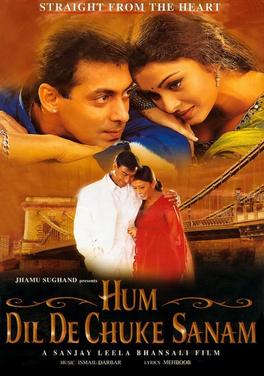
In 1999 I watched the romantic Bollywood Hindi film ‘Hum Dil De Chuke Hai Sanam‘ (I have given away my heart darling). The second half of this visually stunning, unusual love story unfolds in Europe. In the film they say it is Rome, Italy, but having visited Rome previously, I knew it was not. The city was gorgeous, I wanted to be transported into it, but alas which city was it?
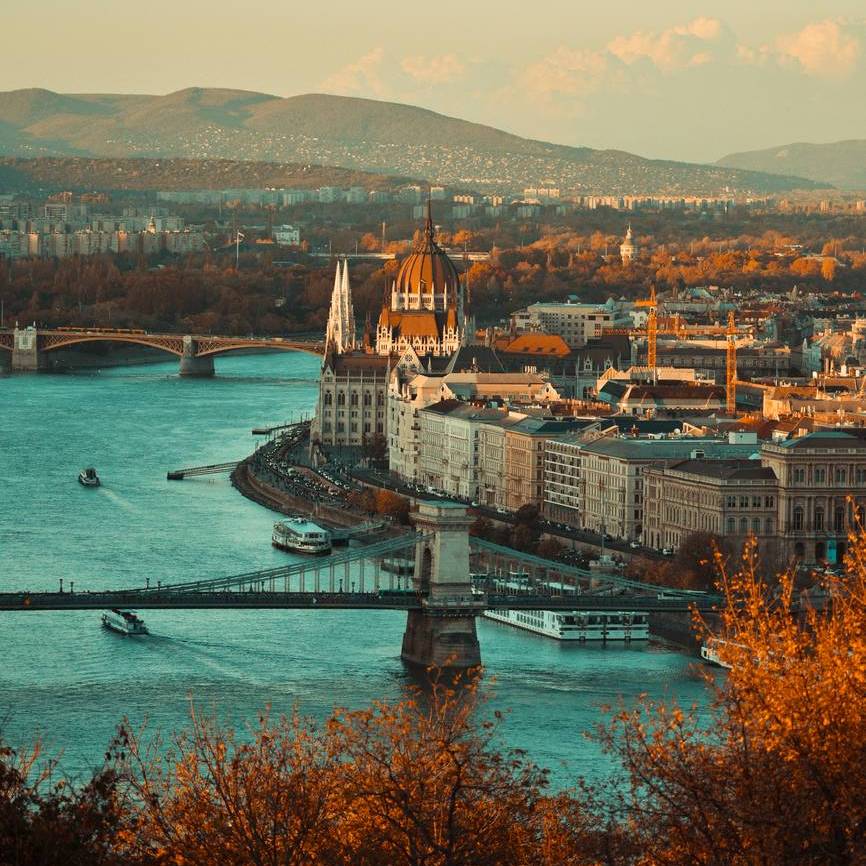
Two years down the line in 2001, I knew the answer, I travelled from Vienna, Austria to Budapest by boat on the Danube, a beautiful memorable journey. Just as the boat turned the bend and I saw the iconic Széchenyi Chain Bridge that spans the cities of Buda and Pest, I experienced a strong sense of déjà vu, had I been here in a past life? Maybe, but then I recollected Nandini, the female character from the above Hindi film running across the bridge and I knew immediately that I had found the city I had so longed to visit. My excitement multiplied manifold and Budapest did not disappoint. I do wish that the grave injustice of calling it Rome in the film could somehow be righted.
In 2012, my husband and I visited Budapest, Hungary together and while doing the research in advance of the holiday, I learnt that Taxi drivers in Budapest were known for fleecing their passengers so I thought that if I could say the names of the places with a perfect Hungarian accent I could avoid being fleeced. One of the places that my guide book said was a must visit was the Váci Utca, perhaps the most famous street (utca) of Budapest. I goggled the pronunciation and found that the Hungarian ‘c’ has a pronunciation unknown to English, Hindi, French or Portuguese, the languages I then spoke, but was pronounced identical to the ‘च’ in Marathi, incidentally the same alphabet ‘च’ in Hindi is pronounced like the English ‘ch’ and the Hungarian ‘cs’. Being fluent since childhood in Marathi, the language spoken in the west Indian state of Maharashtra where my grandmother belonged, I had always adored the interesting rasp of the Marathi ‘च’, it is the pronunciation of this alphabet that marks the authenticity of the accent of a Marathi speaker as does the pronunciation of the Hungarian ‘c’ for a Hungarian learner. I was fascinated and charmed with the discovery of this similarity. In Budapest itself, I found English widely spoken and the taxi drivers still took us for a ride, I obviously was not pronouncing the place names convincingly. However, our interest in Hungary grew, thanks to the lovely people we interacted with.
One evening, while we were in there, we paid a small ransom for a taxi to get us to Margaret Island, an island in the Danube. I had booked tickets online, when in India, for what I had thought was a philharmonic which actually turned out to be a Filmharmonic, which was even more interesting. It was a live orchestra playing out famous film tunes while scenes from the movie were projected onto a huge scene – Benhur, Godfather and the likes. It was already 9 pm by the time they had the interval and we were very nervous about how we would find our way to Pest, where we were lodging, so late at night, we had no local mobile phone to book a cab and even if we managed to book a cab, we were worried about what the chappie may charge. In the interval we made enquiries and found that a ferry would leave after the show and dock at various places, one from where our hotel was walking distance, we breathed a sigh of relief and bought the ferry tickets. We then settled down to enjoy the second half of the show. When the show was over, everyone just seemed to vanish into the darkness, we had no clue as to which direction we should walk in to get to the boat, just as were panicking about this, as if by magic a tall, at least 6ft 3inch tall, strikingly good-looking man dressed in a beautiful dusky pink suit accompanied by an equally striking lady in a little black dress said ‘Follow me’, I looked at him questioningly and he said ‘you need to catch the ferry don’t you?’, we gratefully followed them to the ferry, all the while discussing the similarities between Budapest Taxi drivers and Delhi Autorickshaw drivers. As we walked onto the ferry and headed into the cabin, we bid the couple, who wanted to remain on deck adieu, a little disappointed that our cultural exchange had been cut short. We sat down inside and a couple of minutes later the Hungarian couple came in and the gentleman said that if we did not mind, he wanted to talk with us some more, we were thrilled. Unfortunately, his companion was not comfortable speaking English but did seem to understand us and never looked bored we talked of travel, food and clothes. He was a patisserie chef, with his own pastry shop, he advised us to eat Dobos, a Hungarian sponge cake layered with chocolate buttercream and topped with caramel and Eper Torta, strawberry cake. Too soon, it was time for them to embark, we waved them goodbye as if they were lifelong friends. This wonderful gentleman came to be referred by as the ‘Pink Angel’, every time we feel humanity is disappointing us, we remember ‘Pink Angel’ and the world seems just a little more tolerable.
My next contact with Hungarians took place in the first week of January 2017, my husband and I were on the island of Capri in Italy for New Year and soon thereafter the island was slowly shutting down for the off-season. One evening we were in one of the few restaurants that were still open and noticed that the couple on the table next to us were having difficulty communicating with the waiter in English. Being newly conversant in Italian, I did not miss the opportunity to translate for the benefit of all. This got us couples chatting and I soon found out that they were Hungarians, we chatted during the rest of our dinners, when we finished, we said goodbye and started walking towards our respective hotels, only to start wondering as to who was following whom as we were walking in the same direction, soon to discover that we were living in the same hotel. We invited them for a nightcap and chatted amiably for another hour. Our routine for the next few days, that remained of their holiday were set, we would meet in our suite post in the evening over wine and food and discuss all sorts of subjects – travel, the environment, politics etc., all in English of course. On the third night I got a call from Reception enquiring if the Hungarian couple was in my suite as there was another Hungarian guest who wanted to meet them, I told the receptionist to send him up. My Hungarian friends said that I should let him enter greeting him with ‘Szia‘ – Hello in Hungarian, pronounced exactly like the English ‘see ya’ and confound him. So that is what I did and the new acquaintance responded with a sentence of Hungarian to which I confessed that I was only taking the Mikey out of him and that I was actually Indian. He joined our little group and I soon discovered that he was half Italian, half Hungarian. We spent another evening, now the five of us chatting and dining on a lovely pasta dinner cooked by my husband. I remember that we all went for a walk after dinner and were chatting about Budapest when during a conversation about the Budapest train stations, I said ‘Keleti pu’ remembering the name of the Eastern Railway Station, the male counterpart of Hungarian couple was so touched that I pronounced this word so authentically, that he spontaneously hugged me. Such is the value of knowing even a word in a foreign language. As all good things come to an end so did our meet-ups the Hungarian couple left next morning and the next two days were spent in the company of the Hungarian-Italian, till my husband and I too left Capri. All in all, the Hungarians had endeared me to them once again.
In 2017, I came to know of the ‘free’ Hungarian lessons offered by the Hungarian Information and Cultural Center, New Delhi now Hungarian Cultural Institute Delhi/ Magyar Kulturális Intézet Delhi. I had till then only studied Romance Languages and wanted a more challenging language to study, it seemed providential that I had an opportunity to study Hungarian which is of the Finno-Ugric group of the Uralic language family. I was in Italy when the session started that year, so I waited a whole year, with excitement and applied for the Hungarian course in October 2018. I was hooked on the first day itself, the Hungarian work ethic was at display, the dainty Hungarian Teacher, the handsome and welcoming Director and the smart efficient administrative lady gave us an entrance test and the result and we were set to go.
Frankly just being in the company of the dainty Hungarian teacher was enough incentive to attend the classes, learning the language, that too for free an added bonus. The teacher was tireless, classes were always on time and never cancelled, there were no coffee breaks leave alone long ones that had galled me while learning other languages. Over the six months of the course I learnt of Hungarian history, literature and culture. We celebrated all the important Hungarian days reciting Hungarian poetry, learning Hungarian songs, there were cultural events when Hungarian artists visited India and I was fortunate to even socialize with some. It was the respect that the teacher and the Director of the Institute showed India that made me respect them even more. They exhibited no sense of superiority which I had observed in other such foreign language institutions in India.
The language itself has a fascinating structure. Hungarian is an agglutinative language that uses mainly suffixes to change the meaning of words and their grammatical function. For example, possessive pronouns and prepositions get added as suffixes to the objects themselves. The other challenge that Hungarian brought was the need to learn a lot of words. Unlike the Romance Languages which share a lot of words, be it may written or pronounced slightly differently most Hungarian words were completely new to me and required a lot of effort to memorize. I give you an example the word ‘National’ in French is ‘National/e’, in Portuguese ‘Nacional’ in Italian ‘Nazionale’ in German ‘National’ in Hungarian it is ‘Nemzeti’.
Having fared well with my studies, I recently had the opportunity to attend a four-week Hungarian Language online course at the MagyarOK-Digital Summer University / Digitális MagyarOK of the University of Pécs, Hungary due to the Covid 19 pandemic. Here again, the Hungarian efficiency was in evidence, the teachers were efficient, competent, graceful and kind. The only grouse that I could possibly have was, that the course was conducted a bit too much like clockwork, the syllabus was adhered to at all times, I would have liked more of the personal and cultural touch that I had got used to during my studies in India. I hope that someday I will get an opportunity to go to the town of Pécs and attend the summer course physically and absorb the sights, sound and sensations of the culture which are an important aspect of learning a language.
I have come to both admire and envy the Hungarian efficiency, anyone who craves such efficiency in the systems of their country will understand why ‘envy’.
I am not naïve and I know that there are all sorts of people in every country. I am well aware of the current politics of Hungary, another common denominator with India, with both countries leaning towards the far right, not something that makes me rejoice. But, the low notes in my Hungarian Rhapsody notwithstanding, Magyar has come to be an indelible part of my soul.
 Oselation
Delighted to have read it.
LikeLiked by 1 person
Fantastically expressed…. I was also in your journey during the cultural center period, it was something positive that I always feel about Hungary, Hungarian language…. I really hope I can too widely experience this on international level… In India, New Delhi with cultural center it’s excellent upto now…
LikeLiked by 1 person
It was a pleasure to have you with me on my journey.
LikeLike
Thank you for this affection towards us! 🙂
LikeLike
Thank you Peter ! For sharing this, thoroughly enjoyed reading it !
LikeLiked by 1 person